

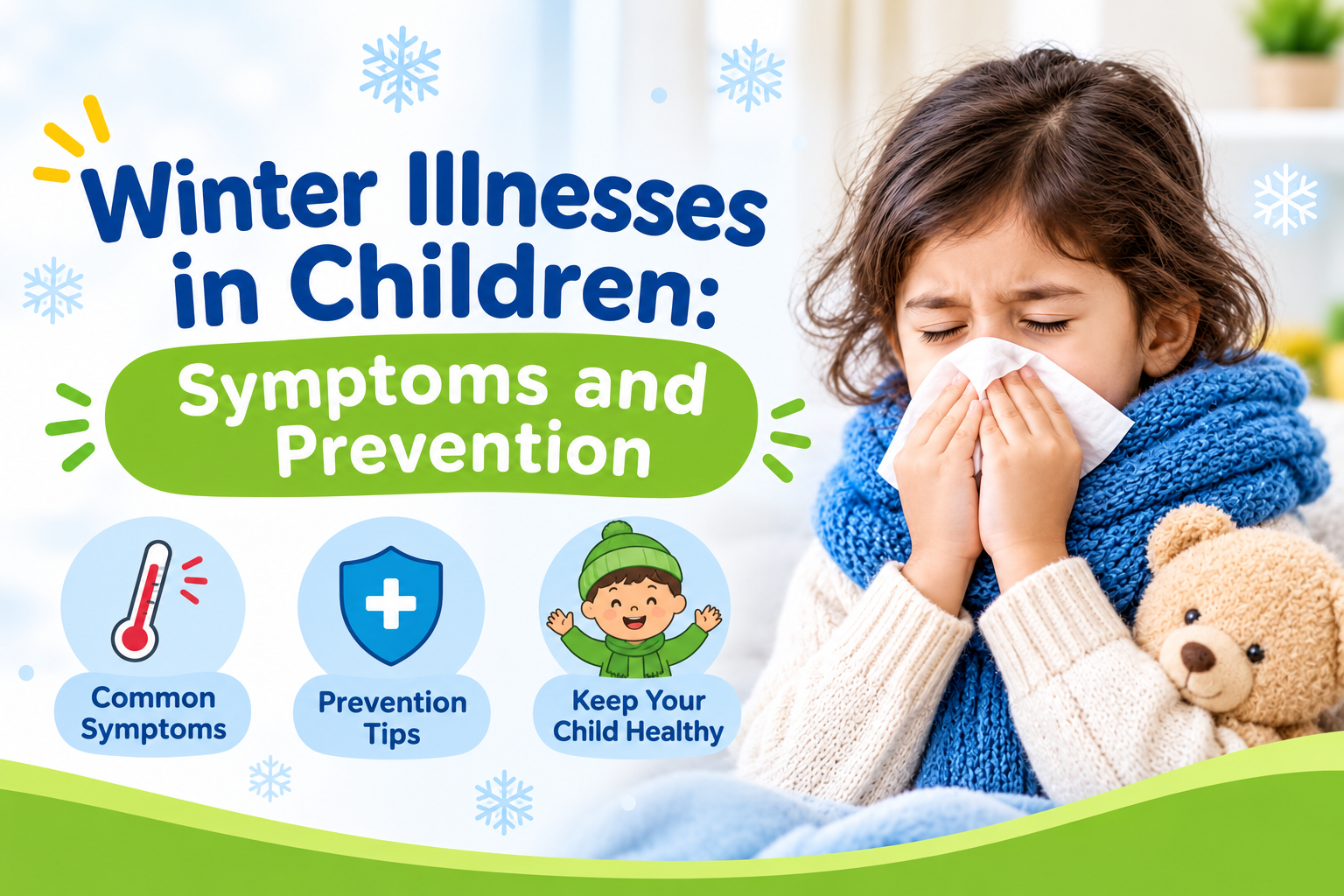
Winter is here, and with that comes coughs, colds, sore throats, and other health issues. Kids immune systems are not fully developed yet, which is why viruses affecting the respiratory system can easily spread among kids. Although most illnesses do not cause any severe harm, there are some situations which might need medical care.
Parents should know about illnesses in kids and be aware of the symptoms that should be considered. Knowing all this will help parents to provide better care for their kids during winter.
Why Are Children More Prone To Illness In Winters?
During winter, there is an increased risk of respiratory diseases due to the weakened immunity of children. Children go to school and play outdoors with other children, which spreads viruses. Although cold weather itself does not cause illnesses such as the common cold or flu, seasonal conditions can create more opportunities for the viruses responsible for these infections to spread.
Common Winter Illnesses in Children
Early detection of symptoms related to winter illnesses will help you offer appropriate treatment in time. Here are the most common ones.
- The Common Cold: The common cold is the most common illness during winter. Common symptoms include
- A runny or stuffy nose
- Sneezing and mild cough
- Sore throat
- Fever
- Fatigue and loss of appetite
- Influenza (Flu): The flu is a more serious illness than a common cold, and it comes all of a sudden.
- Fever usually above 102°F
- Body aches and shivers
- Fatigue
- Dry cough and headaches
- Vomiting and diarrhea
- Ear infections: An ear infection can occur either during or after the cold due to the presence of fluid behind the eardrum. Children often feel severe pain in this situation; hence, parents need to be aware of changes in the child’s behaviour.
- Ear pain or ear discomfort
- Pulling or rubbing the ears frequently
- Fever
- Irritability or problems sleeping
- Loss of appetite
- Sore Throat: Sore throat is very common in winter. It is caused by a viral infection. The inflammation of the tonsils causes tonsillitis, which results in the discomfort of swallowing. Some cases may require diagnosis to determine the underlying cause.
- Difficulty or pain in swallowing
- Red or swollen tonsils
- Fever
- Swollen lymph nodes in the neck area
- Loss of appetite
How Can Parents Help Prevent Winter Illnesses in Children?
There are several actions that parents can take in order to prevent children from developing infections and keep them healthy during winter.
- Wash Hands: Make children wash their hands with water and soap, especially before meals and after they sneeze or cough, and after using the toilet.
- Give Them Balanced Diet: Add various kinds of fruits and vegetables, whole-grain products, protein foods and others to their daily diet.
- Get Enough Sleep: It is important for children to have enough sleep every night since it will assist them to have good well-being.
- Drink More Water: Ask children to consume water on a regular basis even if they do not feel thirsty.
- Maintain Good Indoor Ventilation: Open windows when practical and safe to improve airflow, particularly when several people are sharing an indoor space
When To Seek Medical Help?
While most winter-related ailments resolve on their own and with proper care, some symptoms must never be taken lightly.
- Troubled Breathing: Medical advice is needed when your child is breathing rapidly, is having trouble breathing or has chest retractions.
- Recurring Fever: Consult a doctor when the fever does not decline or symptoms get worse. An infant younger than three months old who runs a temperature of 38°C or higher is an emergency sign and requires immediate medical attention.
- Signs of Dehydration: Fever, dry mouth, reduced tear production or drowsiness can signal dehydration.
- Weakness or Drowsiness: Prompt medical attention is required if your child appears unusually drowsy and is difficult to arouse.
Conclusion
It is common for children to fall ill during winter. For parents, it is important to recognise early signs of these conditions so that they may know how to handle the situation well. Parents can protect their children by ensuring they follow certain routines such as hand washing, proper feeding, enough sleep, and indoor ventilation. It is important to ensure that vaccinations are up to date and to take note of any symptoms like breathing difficulties, dehydration, or excessive sleeping.
Frequently Asked Questions
1. What Are The Most Common Winter Illnesses In Children?
Some of the most common winter illnesses include colds, flu, ear infections, sore throats and bronchiolitis.
2. Why Do Children Get Sick More Often In Winter?
Children often spend more time outdoors playing and in close contact with others, making it easier for viruses to spread.
3. How Can I Tell If My Child Has a Cold or the Flu?
A cold usually develops gradually, while the flu often starts suddenly with fever, body aches and tiredness.
4. How Many Colds A Year Are Normal For Children?
Young children may catch around six to eight colds a year, although this varies with age and exposure to viruses.