

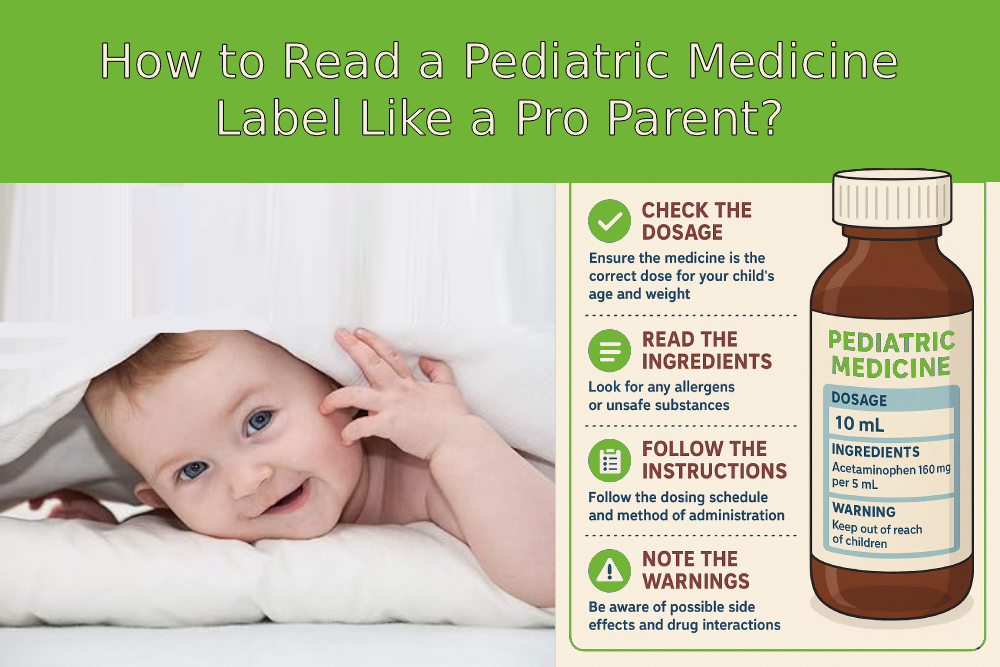
In the case of the health of your child, the smallest detail counts, in particular with the medication labels. It could be a syrup of fever, cough drops, or antibiotics, but knowing what is on that tiny label, be the difference between safe, effective care and a possible danger.
Below is a step-by-step explanation of the process of decoding a pediatric medicine label, like a pro parent.
1. Start with the Name and Active Ingredients
Each medicine label will start with its name, then the active ingredient(s), which is what makes the drug work.
Why it matters:
- In case your child already uses another medicine, you do not need to take the same active substance, and this may lead to overdosing.
Hint: It is always important to ensure that the active ingredient and strength of dosage are the ones that your pediatrician prescribed.
2. Understand the Purpose of the Medicine
This section informs you of the intended use of the medicine, e.g., a pain, fever, or cough inhibitor.
Why it matters:
- Knowing the reason will assist you in not taking two drugs whose effects overlap.
Tip: When the symptoms of your child do not correspond with the purpose listed, then do not take it as an emergency.
3. Check the Dosage Instructions Carefully
The most vital section of the label is the dosage part, particularly in the case of pediatric drugs.
Why it matters:
- Dosage by age or weight: The majority of children’s medicines will give a dose chart depending on age or body weight.
Pro parent tip:
Increasing the dose will not help to get better sooner; it may lead to side effects or even poisoning.
4. Read the Warnings Section Thoroughly
It describes significant safety facts, including:
- Possible side effects
Why it matters:
- The bodies of children do not respond to medicines in the same way that they do in adults.
- A mild overdose may cause the unanticipated effects of stomach upset, rash, or drowsiness.
Expert advice:
In case you are in doubt about any of the listed warnings, then you can ask your pediatrician before administering the medication.
5. Pay Attention to Inactive Ingredients
Usually, inactive ingredients to be aware of:
- Sugar or alcohol: These are added to syrups to make them taste better, but Sugar-free or alcohol-free alternatives are usually healthier and more suitable in the case of young children.
- Preservatives: There are mild reactions of preservatives on children who are predisposed to skin allergies or gastrointestinal disorders.
Pro Tip: The trick here is that when your child is known to be allergic to certain substances, then you need to look at this section before buying any medication or using any medication.
6. Note the Expiry Date and Storage Instructions
Consumption of old pediatric medicine may lower efficacy or even cause a degree of safety risk.
Storage instructions are also important:
- Certain drugs should be stored under refrigeration
- Others should be stored at room temperature and not under sunlight
Pro parent tip:
Prepare a simple list of your medicine checklist at home to monitor expiry dates, particularly of frequently used medication such as fever reducer or pain reliever.
7. Look for Manufacturer and Batch Details
On the lower part of the label there is the name of the manufacturer, the batch number and the manufacture expiry date.
Why it matters:
Brands that are trusted have tough standards of quality control. The manufacturer will assist in ensuring that the products are authentic and safe.
8. Follow the Directions Exactly as Prescribed
The label could be simple, but it’s always good to compare it with your doctor’s prescription.
Avoid common mistakes:
- Do not miss out on doses or double the ones you missed.
- Suspensions should always be shaken before use to have an equal dosage.
A pediatric medicine label is not just about following directions, which is what makes one read the instructions to understand the medicine label. Every line on that piece of paper is designed to ensure the safety and well-being of your child.
Be sure to read it all the way through, ask questions if you have any, and keep your pediatrician informed.
Comments are closed